
Our Fleet
The Hecatoncheires
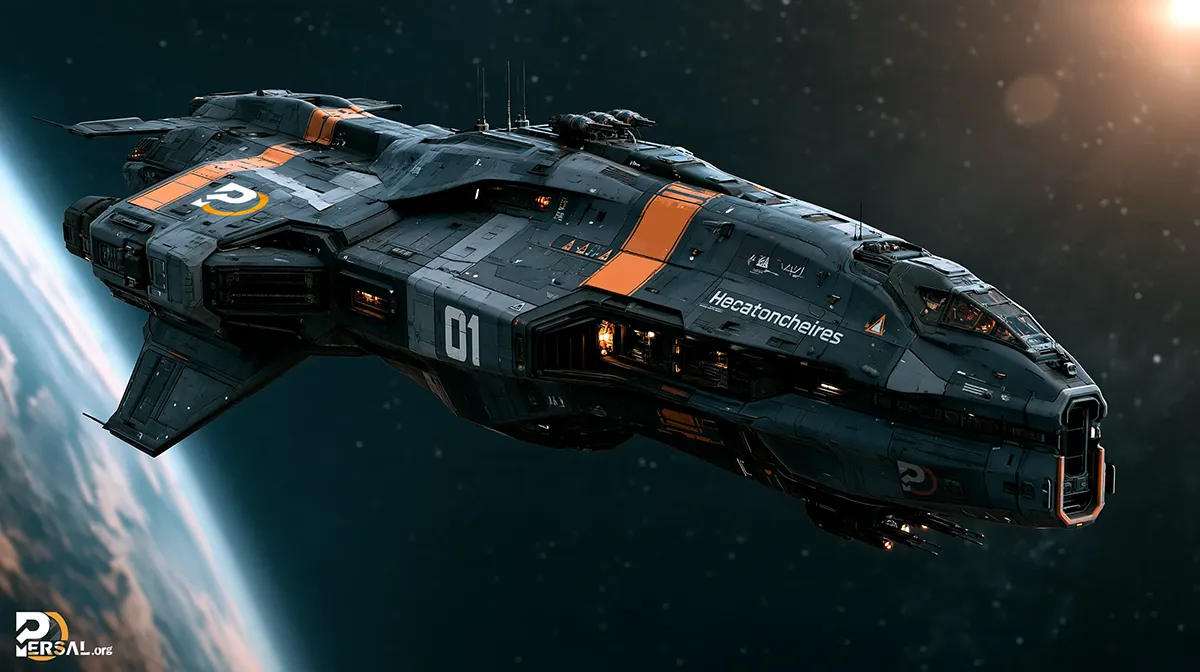
Commissioned in 2486, the Hecatoncheires joined the fleet two years after the Argonautica limped home from Calyx Beta. That ambush taught Persal.org a hard lesson. A single specialized ship couldn’t cover every need. The organization now had to think about logistics and defense, not just discovery.
Its name comes from the Hecatoncheires of Greek myth. Cottus, Briareus, and Gyges were the Hundred-Handed Ones, primordial giants born of Uranus and Gaia. They fought beside Zeus against the Titans. Later, they stood guard over Tartarus itself. Like its namesakes, the ship was built to do many things with many hands. Its holds can carry ore, spare parts, or a squad of technicians. A modest turret suite handles self-defense. There are no docking bays but this ship can refuel smaller craft far from any station.
The Hecatoncheires was never meant to be the best at any one job. It only had to be good enough at all of them. That kept the fledgling fleet moving while Persal.org saved for specialists. Decades later, the Wreckmaster, the Atlas, and the Wanderer now share that load. The Hecatoncheires still flies in active rotation. It’s proof that adaptability, not brute specialization, is what kept Persal.org alive long enough to thrive.
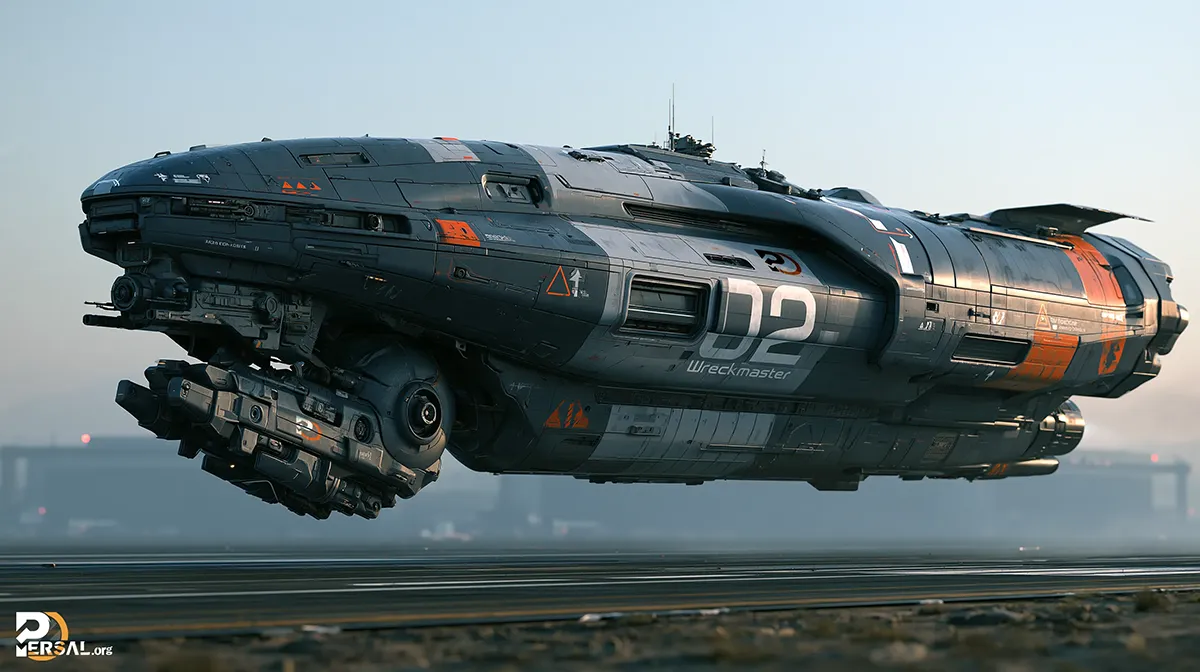
The Wreckmaster
Acquired not long after Persal.org‘s logistics and support program began, the Wreckmaster is an heavy-duty space salvage vessel. It was built for a job nobody else wants: going into a wreck site after the shooting stops and bringing back whatever’s left.
It isn’t much to look at. Every line of its hull is given over to function rather than form. But it carries what the job demands. Long-range jump drives get it to a wreck site first. Launch pods deploy scout and cutting drones once it arrives. Heavy-duty tractor beams and floodlights strong enough to turn a debris field into daylight round out the kit.
Persal.org‘s own surveyors have taken a liking to the ship as well. They borrow its gear whenever a deep-space run turns up something worth a closer look. Whoever is flying it on a given day, one thing holds true. If there’s a mystery drifting past the frontier, the Wreckmaster’s crew is bringing a piece of it home.
The Argonautica
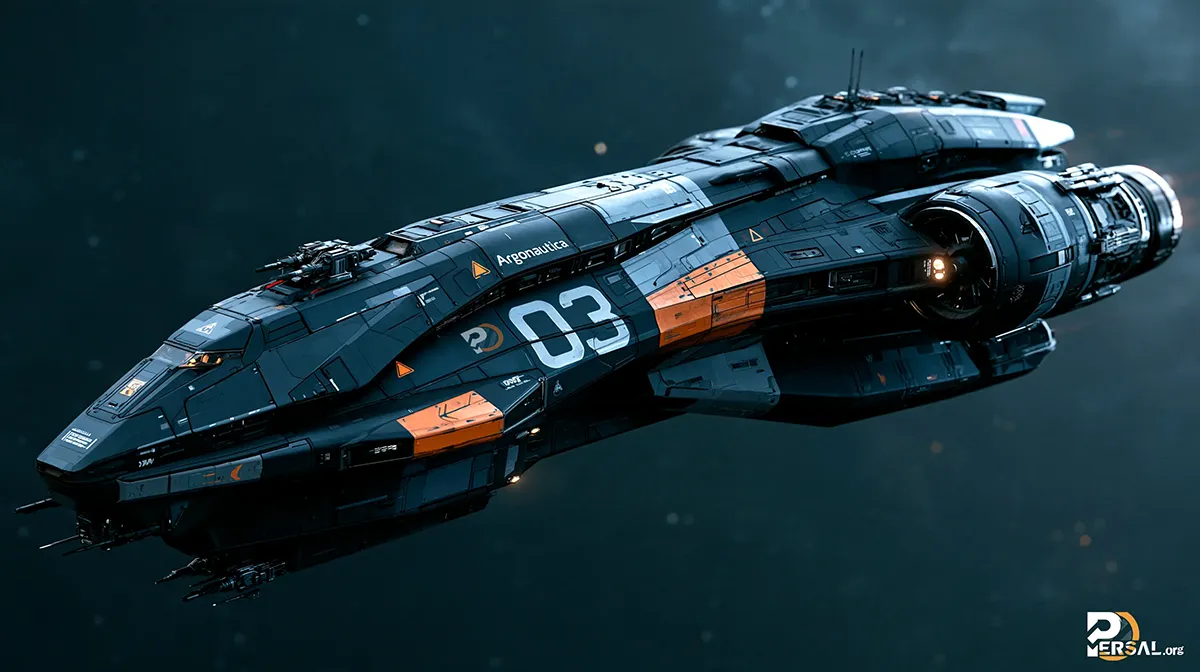
Launched in 2382, the starship has undergone several refurbishments and now featured state-of-the-art long range engines, cutting-edge sensor arrays, and adaptable hull plating that could withstand the most challenging environments.
Its journey was not without sacrifices, like as in the events of Calyx Beta in 2484, but despite this, its crew members continue to reflect the original passion for knowledge and adventure.
Unfold the mysteries of exploration and pathfinding continues to be its primary roles.
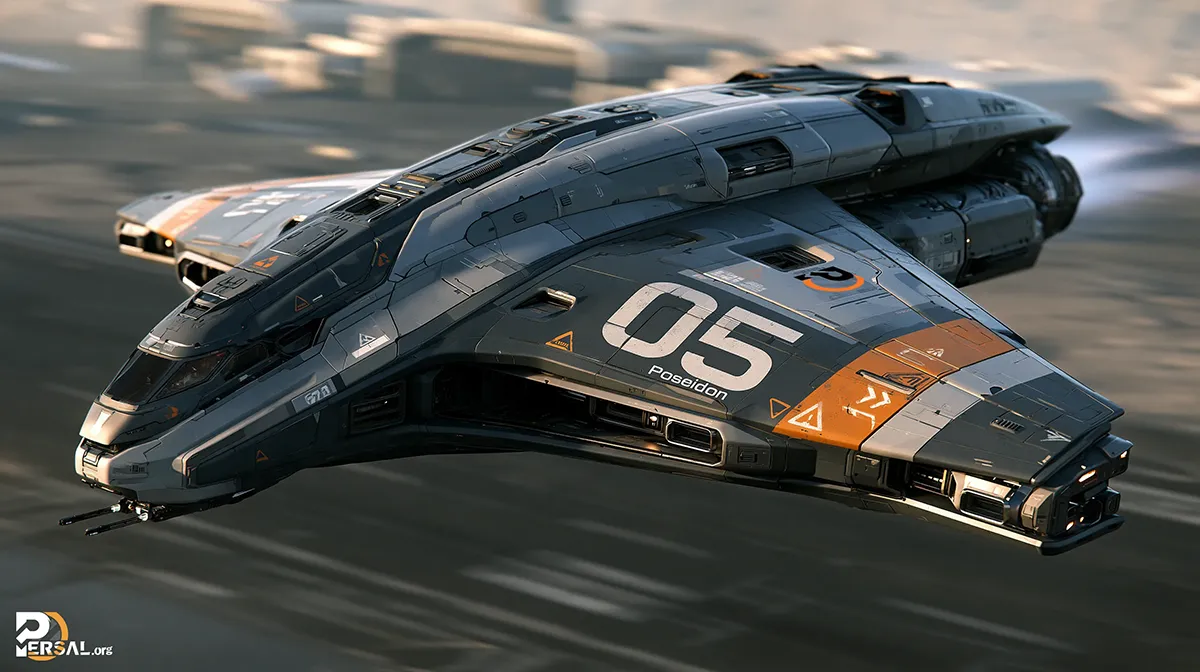
The Poseidon
Commissioned in 2514, the Poseidon arrived the same year Persal.org stood up its security branch. It was built for one specific job: get armed personnel and armored vehicles onto a contested rock or drifting hulk fast. Then get them out again just as quickly.
Named for the god who commanded both the sea and the horse, the Poseidon carries that duality into its design. A deep well deck launches light armor and rapid-response vehicles the moment its ramps drop. Berths and briefing space hold the full security details riding in behind them. It isn’t a line-of-battle warship. Its point-defense turrets and reinforced hull exist to get people and machines onto the ground safely. They aren’t there to trade blows with anything Persal.org can’t outrun.
Since its introduction, the Poseidon has answered the call whenever mining and salvage crews face down raiders or pirates. It drops a wall of security personnel and vehicles between the threat and the operation. You can often see it flying escort alongside the Wanderer, ready to disgorge its cargo at a moment’s notice.
The Nebula
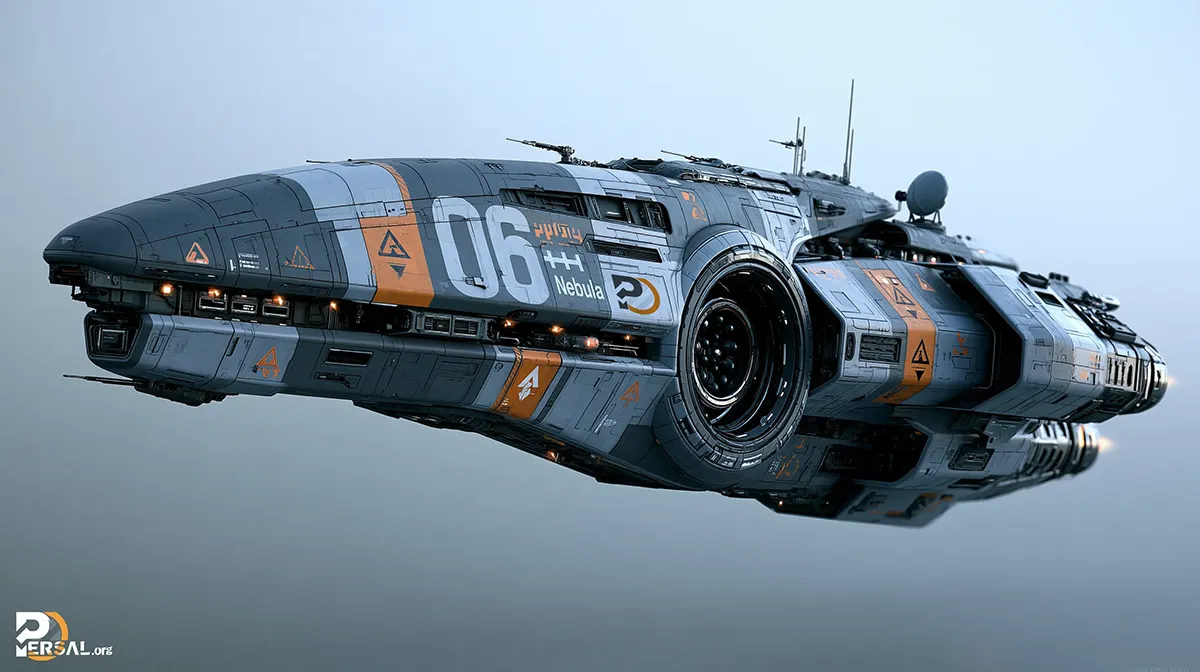
Launched in 2499, just before the Wanderer joined the fleet, the Nebula was the reward Persal.org had been chasing since its founding. It’s a ship built purely for science, with no other job to distract it.
The Nebula carries laboratories, observation decks, and research bays, all wired into a single suite. It can tackle almost any question a crew brings aboard. That ranges from mapping a newly charted world to running long-duration experiments no smaller ship could support.
Some of its most celebrated work has come from joint studies with researchers from the Ilvari Dominion. That’s one of the first outside powers Persal.org built lasting ties with. A single research vessel became a genuine bridge between two very different ways of understanding the universe.
Fully staffed with researchers, engineers, and support crew, the Nebula remains the ship Persal.org points at anything it doesn’t yet understand.
The Atlas
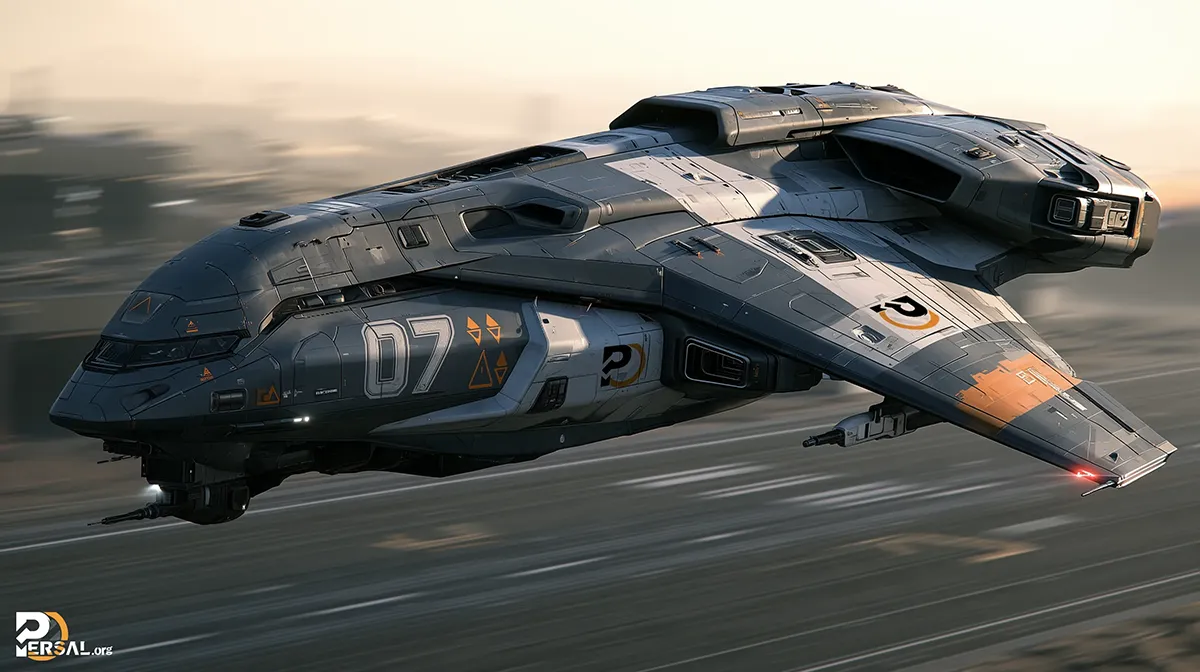
Named after the Titan condemned by Zeus to bear the weight of the heavens, the Atlas is the main Persal.org starlifter. It’s a ship built around one simple idea: some burdens have to be carried, however heavy they are.
Launched as part of Persal.org‘s logistics and support program, the Atlas carries a cavernous cargo hold. It can accommodate a plethora of goods. That makes it essential for transporting vital resources, equipment, and even military vehicles to distant outposts and frontlines.
In 2491, the Atlas became a lifeline during a rescue operation. It carried a large number of injured people to safety after The Umbral Hand blockaded a mining station in the Grid Meridian system. Where the Hecatoncheires improvises and the Wreckmaster scavenges, the Atlas simply carries, reliably, and without complaint, no matter the load.
The Wanderer
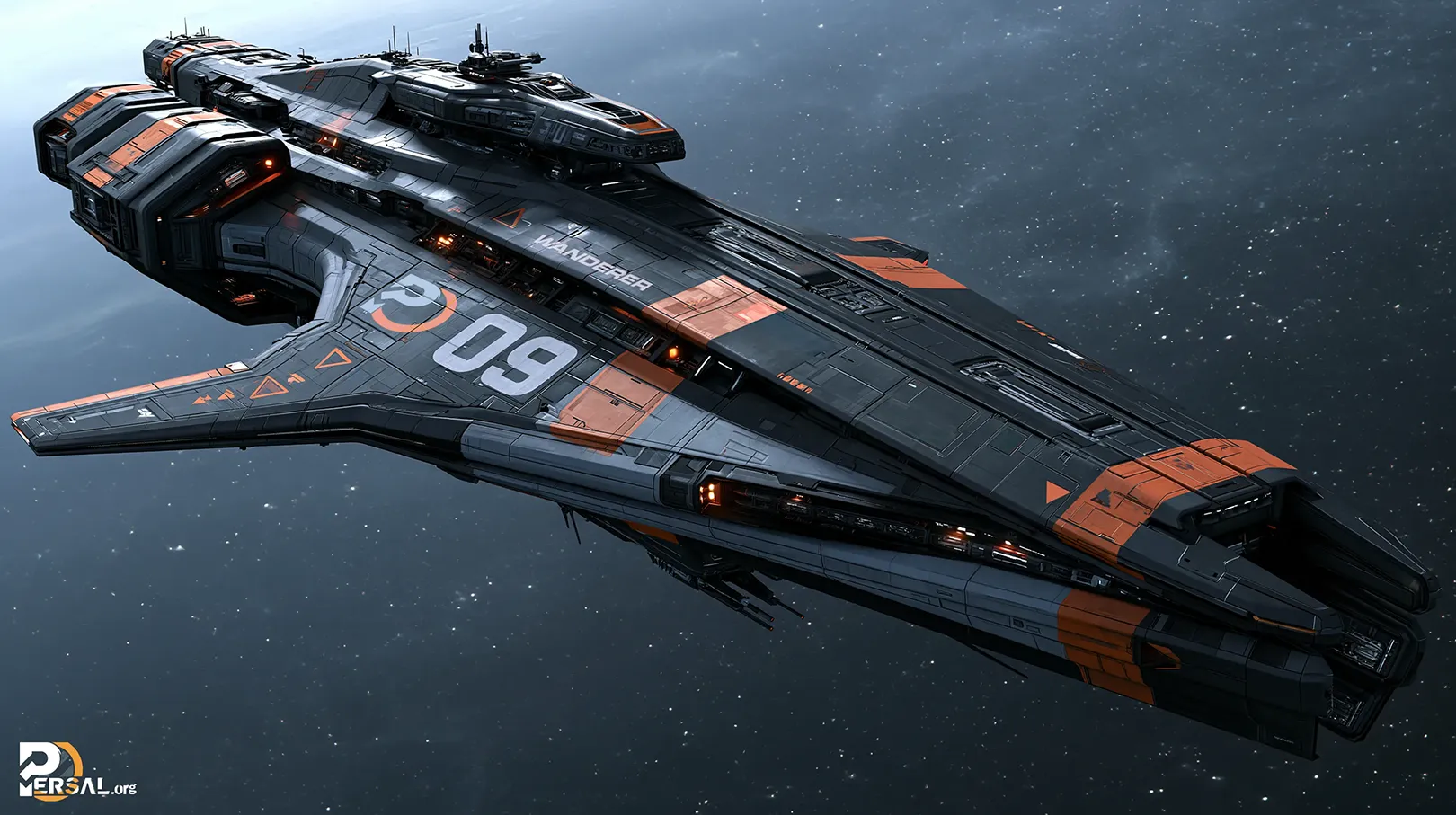
The Persal.org flagship, the Wanderer, is a self-sustaining flying fortress. It supports its crew through the longest expeditions and, when needed, doubles as a trading outpost. Launched in 2502, it can dock and carry several medium and small ships within its own hangars.
Built for more than one purpose, this huge carrier guards Persal.org‘s largest mining and salvage operations. It safeguards precious resources while helping chart new paths to untold riches.
Beyond that role, the Wanderer also serves as neutral ground for interstellar commerce. It’s the same trading outpost that helped Persal.org build ties with outside powers. The Ashen Concord and the Ilvari Dominion both count among them. Its sprawling decks host a standing bazaar, where crews and merchants from very different corners of the galaxy trade goods, knowledge, and stories.
Whether you’re chasing fortune among the stars or looking for a crew who’ll have your back, the Wanderer beckons. The stars are waiting, climb aboard, and let the Wanderer guide the way.